Why children's eye tests are so important
Good vision is fundamental to a child's development. Approximately 80 per cent of what children learn in their early years is processed through their visual system, making healthy eyesight essential for reading, writing, spatial awareness, hand-eye coordination, and social interaction. Yet studies suggest that as many as one in five children in the UK has an undetected vision problem that could be affecting their learning and daily life.
Children rarely complain about poor vision because they assume that everyone sees the world the same way they do. A child who has always been short-sighted does not know that the whiteboard should be clear from the back of the classroom. A child with an undiagnosed squint or lazy eye may not realise that their depth perception is different from their peers. This is why proactive screening and regular eye tests are so important: you cannot rely on a child to tell you something is wrong.
Early detection is also critical because the visual system is still maturing throughout childhood. Conditions like amblyopia, commonly known as lazy eye, can be treated effectively if caught before the age of seven or eight, but become much harder to correct once the visual pathways have fully developed. Missing this treatment window can result in permanently reduced vision in one eye that no amount of glasses or surgery can later fix.
When should children have their eyes tested?
The NHS recommends that all children have their eyes screened as part of the routine health visitor checks in their first years of life. These early checks look for obvious problems such as squint (strabismus), where the eyes do not point in the same direction, and significant refractive errors. However, these screening checks are relatively basic and are not a replacement for a comprehensive eye examination with a qualified optometrist.
The College of Optometrists recommends that children should have a full eye test before they start school, ideally between the ages of three and four. At this age, children are old enough to cooperate with the testing process, and the examination can detect problems that screening alone might miss. If there is a family history of eye problems, such as a parent or sibling who needed glasses at a young age, squint, or lazy eye, an earlier first eye test may be advisable, and you should discuss timing with your optician or GP.
After the initial examination, children should have their eyes tested every year. Annual testing is recommended because children's eyes change rapidly as they grow, and conditions such as myopia can progress quickly during the primary and secondary school years. Regular testing ensures that any prescription changes are detected and corrected promptly, keeping your child comfortable and able to learn effectively.
What happens during a children's eye test?
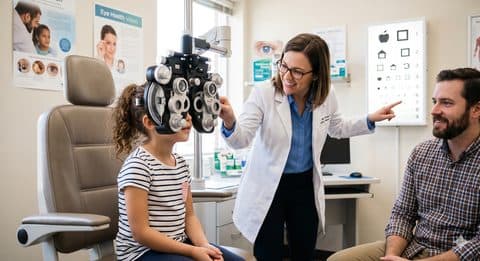
Parents often worry that their child will not be able to cooperate with an eye test, particularly if the child is very young or anxious. However, optometrists who work with children are skilled at making the process fun and engaging, and modern testing methods do not require a child to be able to read or even speak.
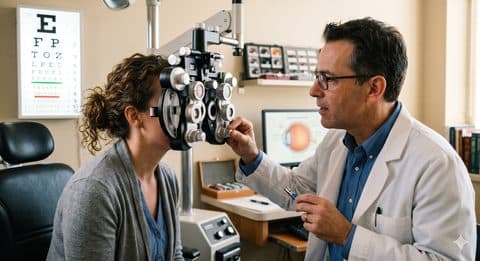
For very young children, the optometrist may use picture charts instead of letter charts, showing images of houses, flowers, and other recognisable shapes. They may use retinoscopy, a technique where a beam of light is shone into the eye while the optometrist observes the reflection through a series of lenses, to objectively measure the child's prescription without any input from the child at all. This means that even non-verbal toddlers can have their eyesight assessed accurately.
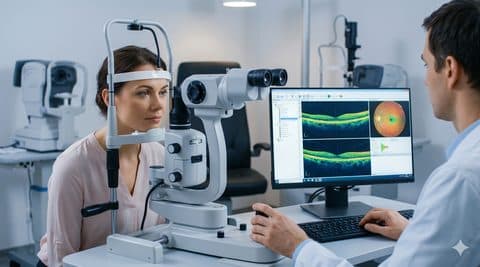
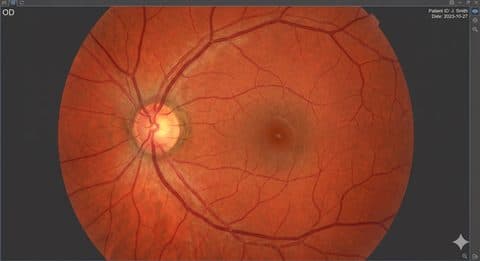
The examination will also include a check of how well the two eyes work together, an assessment of eye movements and alignment, and an examination of the front and back of the eyes to check for any health problems. The optometrist will look for signs of squint, lazy eye, colour vision deficiency, and any structural abnormalities. The entire appointment typically takes between 20 and 30 minutes, and many opticians have child-friendly waiting areas with toys and books to put young patients at ease.
Common childhood eye conditions
Myopia, or short-sightedness, is the most common refractive error in children and is becoming increasingly prevalent worldwide. A myopic child can see nearby objects clearly but struggles with distance vision, which can affect their ability to see the whiteboard, watch television, and participate in sports. Myopia typically develops during primary school and tends to worsen during adolescence before stabilising in the late teens or early twenties. Glasses or contact lenses provide clear vision, and there are also myopia management strategies available that can slow the progression of the condition.
Hypermetropia, or long-sightedness, is common in young children and usually decreases as the eye grows. Moderate hypermetropia is normal in infants and may not require correction, but significant hypermetropia can cause the child to work harder to focus, leading to eye strain, headaches, and difficulty with close work. In some cases, uncorrected hypermetropia can trigger a convergent squint, where one eye turns inward, or contribute to the development of amblyopia.
Amblyopia, or lazy eye, occurs when one eye does not develop normal visual acuity during childhood, usually because it has been suppressed by the brain in favour of the other eye. It can result from a squint, a significant difference in prescription between the two eyes, or obstruction of the visual axis by conditions such as a droopy eyelid or cataract. Treatment typically involves patching the stronger eye to force the weaker eye to work harder, sometimes combined with glasses or atropine drops. Treatment is most effective when started before the age of seven.
Squint, or strabismus, is a condition where the eyes do not align properly and point in different directions. One eye may turn inward, outward, upward, or downward, either constantly or intermittently. Squints are relatively common in young children and can run in families. If left untreated, a squint can lead to amblyopia in the turning eye because the brain learns to ignore the misaligned image to avoid double vision. Treatment may include glasses, patching, eye exercises, or in some cases, surgery.
Signs that your child may have a vision problem
Because children rarely volunteer information about their eyesight, parents and carers need to be alert to indirect signs that something might be wrong. Common indicators include sitting very close to the television or holding books and tablets close to the face, frequent eye rubbing, excessive blinking, one eye turning in or out especially when the child is tired, difficulty catching or hitting a ball, complaints of headaches or tired eyes, avoidance of reading or close-up activities, losing their place when reading or using a finger to track words, and poor concentration or behavioural difficulties at school that may be mistaken for attention problems.
If your child's teacher reports any concerns about their vision or ability to see the board, take this seriously and arrange an eye test. Schools may offer basic vision screening, but this is not a substitute for a full examination with an optometrist and can miss subtle but important problems.
It is also worth noting that children do not need to be able to read to have an eye test. As mentioned earlier, optometrists have a range of techniques for assessing the vision of pre-verbal and pre-literate children. There is no such thing as "too young" for an eye check if you have concerns.
NHS entitlements and costs
All children under 16 are entitled to a free NHS eye test, as are young people under 19 who are in full-time education. This means there is absolutely no financial barrier to getting your child's eyes checked regularly. In addition to the free eye test, children who need glasses are entitled to an NHS optical voucher that can be used towards the cost of their spectacles. The voucher value depends on the prescription, and while it may not cover the full cost of designer frames, it makes basic glasses available at no cost.
If your child needs glasses, involve them in choosing frames that they like and feel comfortable wearing. A child is far more likely to wear their glasses consistently if they have chosen a style they are happy with. Look for durable, lightweight frames with flexible hinges and spring temples, as these will withstand the rough and tumble of school life. Your optician can advise on the most suitable lens materials and coatings for your child's age and activities.
Tips for making eye tests positive for children
The prospect of an eye test can be daunting for some children, especially if they are anxious about medical appointments or are visiting an optician for the first time. Here are some practical ways to make the experience as positive and stress-free as possible. Talk to your child in advance about what will happen during the eye test, using simple, age-appropriate language. Emphasise that it will not hurt and that the optician is a friendly person who helps people see better.
If your child wears glasses and is being teased at school, address this sensitively and remind them that glasses are a positive thing that helps them see the world clearly. Many children's role models, cartoon characters, and sports stars wear glasses, and pointing these out can help normalise the experience. Consider letting your child bring a favourite toy or comforting item to the appointment, and reward them afterwards with a small treat or activity they enjoy.
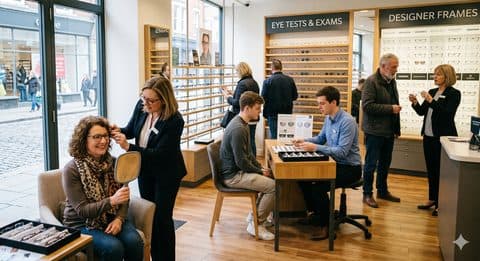
Choose an optician that has experience with children and a welcoming, child-friendly environment. Many practices have dedicated children's testing rooms with colourful decor, child-sized chairs, and age-appropriate testing equipment. If your child has additional needs, such as autism spectrum disorder or a learning disability, phone ahead and let the practice know so they can make appropriate adjustments, such as booking a longer appointment slot or preparing visual aids.
Building lifelong eye health habits
Encouraging good eye health habits from a young age sets your child up for a lifetime of healthy vision. Ensure they spend time outdoors every day, as research has shown that outdoor play is associated with a reduced risk of developing myopia. Limit recreational screen time and ensure they take regular breaks when using digital devices. Teach them the 20-20-20 rule: every 20 minutes, look at something 20 feet away for 20 seconds.
Ensure your child wears sunglasses with UV protection when outdoors in bright conditions, as children's eyes are more susceptible to UV damage than adult eyes because their lenses are clearer and less able to filter harmful radiation. Provide a balanced diet rich in fruits, vegetables, and oily fish, which contain nutrients that support visual development and long-term eye health.
Most importantly, make eye tests a normal, routine part of your family's healthcare calendar, just like dental check-ups and vaccinations. By normalising regular eye care from an early age, you are giving your child the best possible foundation for a lifetime of clear, comfortable vision.